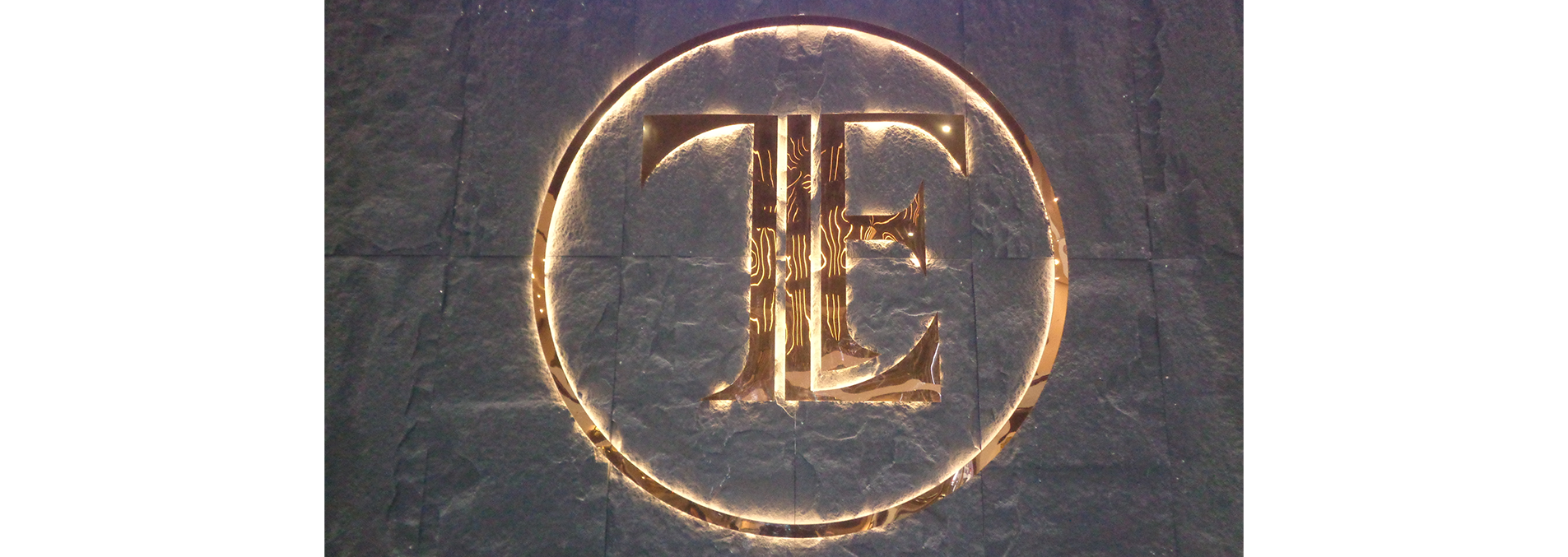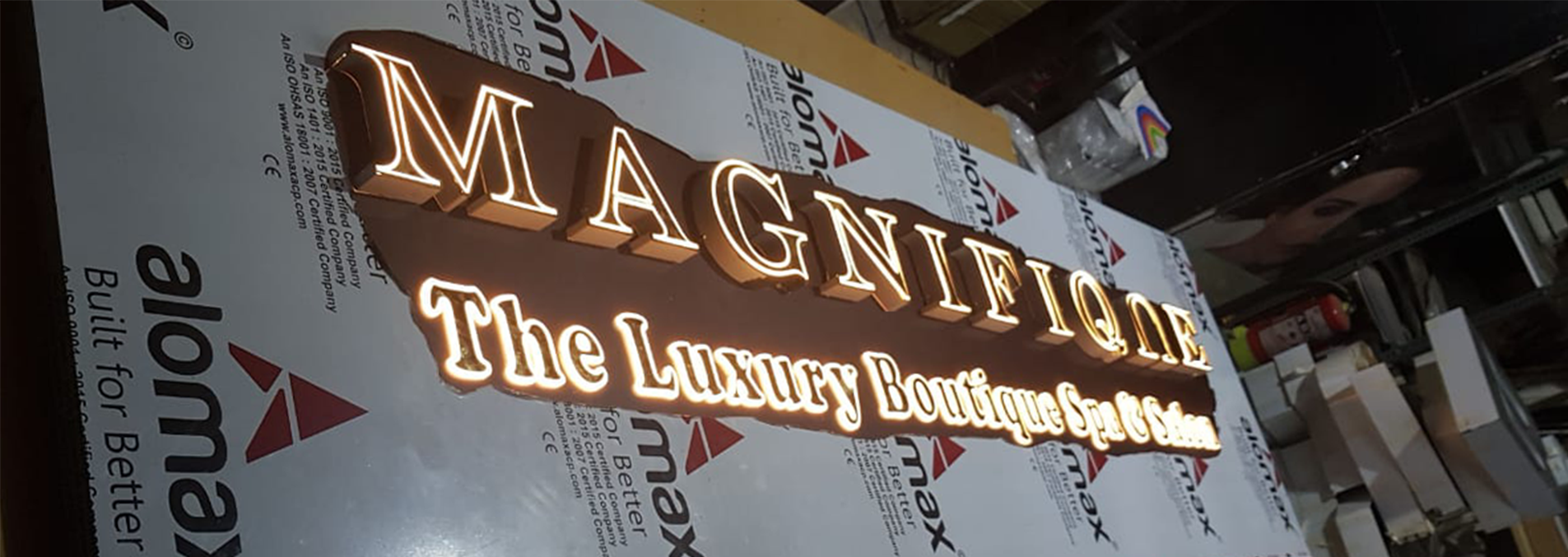
When a client asks for LED channel letters, most people focus only on design, size and lighting. But very few understand that how the letters are fabricated makes a big difference in durability, accuracy and final appearance.
There are two main ways to make channel letters for signs:- Making things by hand (bending and cutting by hand)
- Making things with a CNC machine
In India, both methods are used, but which one is used depends on the budget, the size of the workshop and how it is set up.
Let's figure out what the real difference is in real life.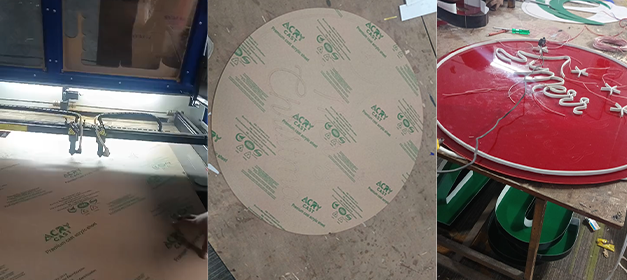
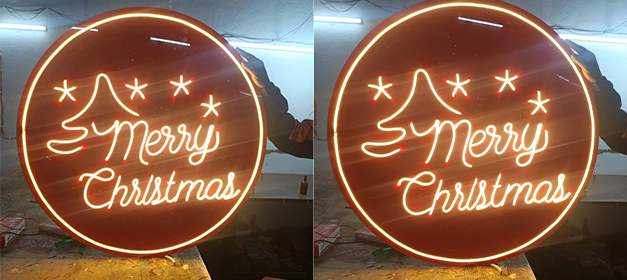
1. Manual Channel Letter Making (Hand Fabrication)
How It Is Done- Aluminum coil is cut manually.
- Side returns are bent by hand using tools.
- The acrylic front is cut using a hand router or jigsaw.
- Corners are joined manually.
- LED modules are stuck inside.
- Silicone is used to seal.
- Good for small quantities
- Lower setup cost
- Flexible for custom, one off designs
- Helpful in small towns where CNC isn't available
- The corners might not be perfectly sharp.
- Curve consistency depends on worker skill.
- Letter depth variation can happen.
- Slight alignment mismatch possible.
- Finishing depends heavily on craftsmanship.
Experienced fabricators can still make manual work look good. But when making a lot of letters or working on a big project, it can be hard to stay consistent.
2. CNC Machine Channel Letter Making
How It Is Done- The design file (CDR / AI) is directly fed into the CNC.
- Acrylic is laser cut or router cut with exact precision.
- An automatic bending machine bends aluminum returns.
- Slotting and notching are accurate.
- Uniform depth maintained.
- Clean edge finishing.
- Perfect size accuracy.
- Sharp corners & smooth curves.
- Same depth for all letters.
- Fast production time.
- Professional industrial finish.
- Best for bulk orders & corporate projects.
- Higher machine investment.
- Slightly higher fabrication cost.
- Needs proper design file.
Major Differences Explained
| Factor | Manual Fabrication | CNC Fabrication |
|---|---|---|
| Accuracy | It depends on skill | Computer precise |
| Curve smoothness | Can vary | Perfect uniform curves |
| Production speed | Slow | Fast |
| Bulk order handling | Difficult | Easy |
| Finishing look | Semi professional | Premium & clean |
| Consistency | May vary letter to letter | 100% uniform |
Finishing Look, What Client Actually Notices
In real projects (especially malls, corporate offices, liquor stores and premium retail outlets) finishing matters a lot
Manual letters look like this:
- Slight corner unevenness.
- Silicone joints visible sometimes.
- Minor size difference.
- Slight depth variation.
CNC Letters Look Like This:
- Perfect edge lines.
- Clean joints.
- Uniform projection.
- Better paint/powder coating alignment.
- Premium branding feel.
For high end brands, showroom facades and large ACP signboards, CNC made letters always give a better presentation.
Which One Should You Choose?
Choose Manual Fabrication When:- Small local shop signage.
- Budget is limited.
- Simple font design.
- Quantity is low.
- Corporate branding.
- Franchise stores.
- Mall projects.
- Large sized letters.
- High brand visibility required.
In today’s competitive market, finishing directly impacts brand perception. A well fabricated CNC letter can make even a simple design look premium.
Practical Industry Insight
In India, many small workshops still use manual methods. But metro cities like Delhi NCR, Mumbai, Bangalore and Hyderabad are rapidly shifting towards
CNC based production because:- Clients demand clean finishing.
- Architects expect precision.
- Bulk roll out projects require consistency.
- LED fittings become more structured.
If your signs are a part of your brand identity, you shouldn't ignore how they are made.